
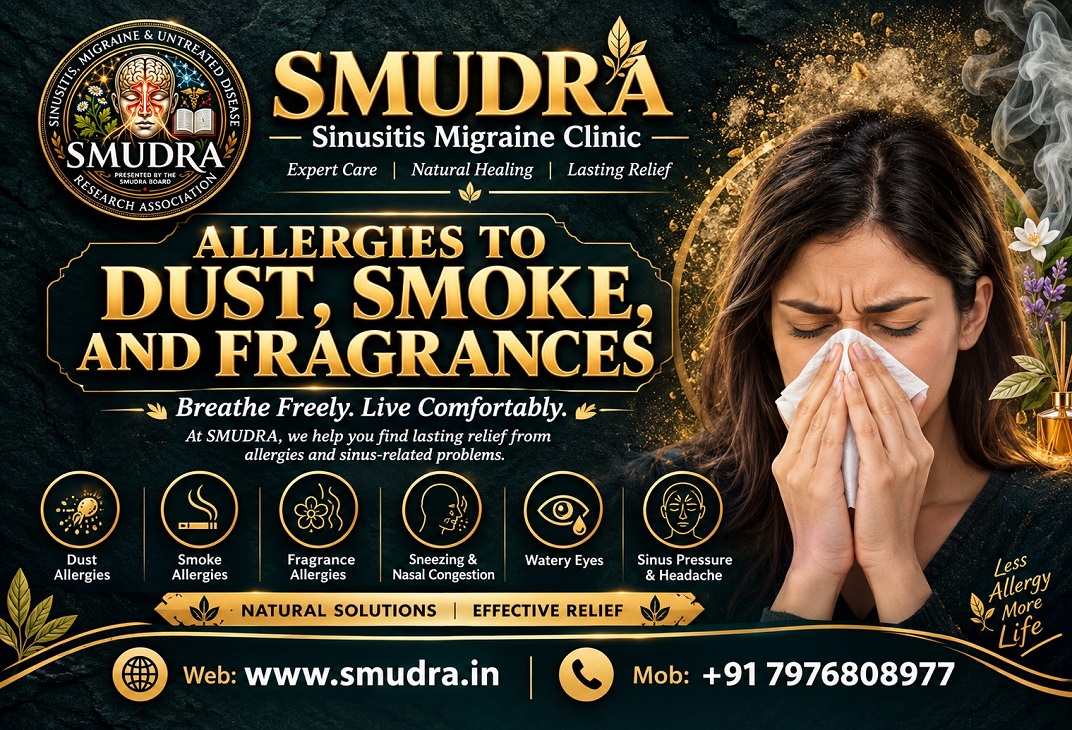
Allergies to Dust, Smoke, and Fragrances: Causes, Symptoms & Management
Keywords:
dust allergy and sinusitis, smoke allergy symptoms, fragrance allergy symptoms, allergy causing nasal congestion, dust allergy treatment, sinus allergy symptoms, allergic rhinitis, sinusitis and allergies, nasal congestion from allergies, migraine triggered by allergies
Introduction
Do you experience sneezing, a blocked or runny nose, nasal irritation, watery eyes, headache, or facial pressure after exposure to dust, smoke, perfumes, or strong fragrances?
These environmental triggers can irritate the nose and airways and may worsen symptoms in people who have allergic rhinitis, sinus problems, or sensitivity to airborne irritants.
Understanding your triggers and reducing exposure can be an important part of managing recurring nasal and sinus symptoms.
What Are Allergies to Dust, Smoke, and Fragrances?
An allergy occurs when the immune system reacts to a substance that is normally harmless. Dust mites, pollen, mold, and animal dander are common allergens.
Smoke and fragrances are different. They can cause irritation or trigger symptoms even when there is no true allergic reaction.
For this reason, recurring symptoms after exposure to dust, smoke, or perfumes may have several possible causes, including allergies, nasal irritation, or sensitivity to airborne chemicals.
Common Symptoms
Exposure to environmental triggers may be followed by symptoms such as:
- Frequent sneezing
- Runny or stuffy nose
- Nasal congestion
- Itchy nose or throat
- Watery or irritated eyes
- Postnasal drip
- Coughing or throat irritation
- Facial pressure
- Headache
- Reduced sense of smell
- Difficulty breathing in people with sensitive airways
Symptoms and their severity can vary considerably from person to person.
Dust Allergy and Sinus Problems
Dust can contain several potential triggers, particularly dust mites, mold particles, and other allergens.
For susceptible people, exposure may cause inflammation inside the nose, leading to congestion and difficulty breathing through the nose. Persistent nasal inflammation may also contribute to sinus-related discomfort.
Keeping bedrooms, mattresses, pillows, carpets, and other dust-collecting areas clean can help reduce exposure.
Smoke as a Trigger
Cigarette smoke, incense smoke, cooking smoke, vehicle pollution, and other airborne pollutants can irritate the nose and respiratory tract.
If smoke consistently causes sneezing, congestion, coughing, headache, or breathing discomfort, limiting exposure is advisable.
Secondhand tobacco smoke should also be avoided whenever possible.
Fragrance and Perfume Sensitivity
Strong perfumes, room fresheners, deodorants, cleaning products, and scented candles can trigger symptoms in sensitive individuals.
Possible reactions include:
- Nasal irritation
- Sneezing
- Headache
- Watery eyes
- Throat irritation
- Coughing
- Nasal congestion
Not every reaction to fragrance represents an allergy. Some people experience irritation or sensitivity without an immune-mediated allergy.
Can Allergies Trigger Headaches or Migraine?
Allergy symptoms and migraine can occur together, but they are not necessarily the same condition.
Nasal congestion, poor sleep, environmental triggers, and other factors may contribute to headaches in some individuals. Strong smells are also recognized as a possible migraine trigger for some people.
If headaches are frequent, severe, or accompanied by visual changes, nausea, neurological symptoms, or other unusual symptoms, professional medical evaluation is important.
How to Reduce Exposure to Environmental Triggers
Simple environmental measures may help reduce symptoms:
1. Keep Dust Under Control
Clean surfaces regularly and pay particular attention to bedding, carpets, curtains, and other areas where dust accumulates.
2. Improve Indoor Air Quality
Maintain good ventilation and minimize exposure to smoke and heavy air pollution.
3. Avoid Strong Fragrances
If perfumes, room fresheners, or scented products trigger symptoms, choose fragrance-free alternatives.
4. Keep Bedding Clean
Regular washing of bedding can help reduce exposure to dust mites and other allergens.
5. Identify Your Personal Triggers
Keeping a symptom diary can help identify whether symptoms repeatedly occur after exposure to specific substances.
When Should You Consult a Doctor?
Consider seeking medical advice if you have:
- Persistent nasal congestion
- Repeated sinus symptoms
- Frequent headaches or migraine attacks
- Difficulty breathing
- Symptoms that interfere with sleep or daily activities
- Recurrent symptoms despite avoiding known triggers
- Frequent or unexplained nosebleeds
- Severe facial pain or swelling
A healthcare professional can help determine whether symptoms are related to allergy, sinus disease, migraine, irritation, or another condition.
Sino Care Sinusitis Migraine Treatment Pack
Sino Care Sinusitis Migraine Treatment Pack is presented by SMUDRA as an Ayurvedic treatment approach for people seeking support for sinusitis- and migraine-related symptoms.
If you experience recurring nasal congestion, facial pressure, headaches, or sensitivity to environmental triggers, an appropriate evaluation can help identify the underlying causes and guide treatment.
Important: Individual results may vary. Medical symptoms should be evaluated by a qualified healthcare professional, particularly when symptoms are persistent or severe.
Frequently Asked Questions
Can dust cause nasal congestion?
Yes. Dust exposure can trigger allergic or irritant-related nasal symptoms in susceptible people, including sneezing and nasal congestion.
Can smoke make sinus symptoms worse?
Smoke can irritate the nasal passages and respiratory tract and may worsen congestion or other symptoms in sensitive individuals.
Can perfume trigger headaches?
Strong smells, including perfumes, can trigger headaches or migraine attacks in some people.
Is fragrance sensitivity the same as a fragrance allergy?
Not necessarily. Fragrances can cause irritation or sensitivity without producing a true allergic reaction.
How can I reduce dust allergy symptoms?
Reducing dust exposure, washing bedding regularly, cleaning dust-collecting surfaces, and identifying personal triggers may help.
Can allergies cause sinusitis?
Allergic inflammation can contribute to nasal congestion and impaired sinus drainage. However, persistent sinus symptoms can have several causes and should be evaluated appropriately.
When should I seek medical help?
Seek professional advice when symptoms are persistent, recurrent, severe, affect daily life, or involve breathing difficulties or unusual neurological symptoms.
Conclusion
Allergies to dust, smoke, and fragrances can be frustrating, especially when exposure repeatedly causes sneezing, nasal congestion, irritation, headaches, or other symptoms.
Identifying your triggers, reducing exposure, maintaining a healthy indoor environment, and obtaining an appropriate medical evaluation can help you manage recurring symptoms more effectively.
For people experiencing persistent sinusitis- or migraine-related complaints, Sino Care Sinusitis Migraine Treatment Pack is one treatment option presented by SMUDRA. Consult a qualified healthcare professional to determine the most appropriate approach for your individual symptoms.
Contact SMUDRA
Sino Care Sinusitis Migraine Treatment Pack
SMUDRA Sinusitis Migraine Clinic
Dr. Sangeeta Phogat
Dr. Pankaj Rohilla
Website: www.samudra.in
Mobile: +91 7976808977
Additional
- allergies to dust smoke and perfume
- dust allergy and sinus congestion
- smoke allergy symptoms
- perfume allergy symptoms
- fragrance sensitivity and headache
- dust allergy causing blocked nose
- environmental allergies and sinusitis
- allergic rhinitis from dust
- strong smells triggering migraine
- how to reduce dust allergy symptoms
- causes of nasal congestion from allergies
- allergies causing sinus pressure
- dust and smoke sinus problems
- fragrance sensitivity headache
- sinusitis and environmental allergies


Leave Your Comment